The Royalty Paper Trail: What Tyrese’s AI Campaign Reveals About Getting Paid
By the BlackRefer Editorial Team · November 20, 2026
Tyrese Gibson’s reported “Royalty Campaign” puts a familiar problem in a memorable frame: AI assistants helping trace the use of an entertainer’s work and organize requests for an accounting.
An artist can be recognizable everywhere and still not see where the money goes. The question is not whether your work travels. It is whether you can follow the rights, records, and payments that travel with it.
In a November 17 report, The AI Musicpreneur describes Gibson using Claude and ChatGPT in a video and attributing a campaign covering approximately 7,500 companies in roughly 20 countries, with about 600 emails a day, to the setup. Those are reported claims about his campaign, not independently verified totals, confirmed infringements, or documented royalty recoveries. The report also says the video does not show the underlying instructions, connectors, sent messages, or replies. 1
That distinction doesn’t weaken the idea. It sharpens it. An artist doesn’t need to prove that an autonomous system can collect money across the world to ask a serious business question: Can better tools make the payment trail easier to understand?
For Black artists, independent labels, producers, filmmakers, and the businesses supporting them, the opportunity is not another promise of effortless income. It is a stronger system for documenting what exists, understanding who controls it, and investigating discrepancies without mistaking suspicion for proof.
AI can help organize the investigation. Rights, evidence, agreements, and accountable people determine what can actually be claimed.
1. Visibility is not the same as a receivable
A song appears in a playlist. A performance turns up in an online clip. A film plays in a venue. A face appears beside a product. These are all observations worth examining. They’re not all the same commercial transaction.
Before asking who owes money, ask what was used, where it was used, which rights were involved, and who was authorized to administer those rights. The business playing the work may have paid a supplier. The supplier may have paid a collecting organization. A publisher, label, distributor, or administrator may sit between that payment and the creator.
There may be a genuine underpayment. There may be a reporting delay, an ownership conflict, an incomplete registration, or a misunderstanding of the agreement. There may also be no additional payment owed to the person who spotted the use.
A use is a lead. A verified entitlement is a different thing.
This matters especially when an investigation crosses borders. The applicable rights, collection arrangements, exceptions, and available remedies can change by territory. A spreadsheet of global appearances isn’t a global invoice.
So the first upgrade is classification, not confrontation. Put each observed use into a review file before turning it into an accusation.
2. One song can have more than one payment trail
The U.S. Copyright Office distinguishes a musical composition from a sound recording. The composition is the music and accompanying lyrics; the recording is a particular recorded performance. They are separate works and may have different owners. 2
That means being the singer doesn’t automatically establish ownership of the composition. Writing the song doesn’t automatically establish ownership of the recording. An artist who occupies both roles still needs to understand the agreements governing each.
On the composition side, The Mechanical Licensing Collective administers U.S. digital audio mechanical royalties from participating services. Its guidance explains that a performing rights organization, or PRO, collects public performance royalties, while The MLC collects mechanical royalties from U.S. streaming platforms. One doesn’t replace the other. 3
On the recording side, SoundExchange administers the statutory license for covered non-interactive digital uses. Its guidance describes distributions to featured artists, non-featured artists, and sound recording rights owners. That’s not a universal formula for every stream or every music contract. 4 5
For covered royalties under that framework, SoundExchange identifies a 45 percent share for featured artists, 5 percent for a fund for non-featured artists, and 50 percent for the recording rights owner. Those percentages shouldn’t be applied to an artist’s entire income or to every payment from an on-demand service. 5
Other recording income may be administered through a label or distributor under the actual agreement. Synchronization, audiovisual uses, and film-related compensation require their own review. Neither The MLC nor SoundExchange is a single collection desk for everything an entertainer has ever made.
For a working creator, a useful starting map looks like this:
| What you are reviewing | Where the first inquiry may belong | What needs checking |
|---|---|---|
| U.S. digital audio mechanical royalties for a composition | Your publisher or administrator; The MLC where appropriate | Work registration, ownership share, authorized payee, usage period |
| Composition public performance royalties | Your PRO or publishing administrator | Registered writers and publishers, repertoire, territory, reporting |
| Covered non-interactive digital recording royalties | SoundExchange and the relevant rights administrator | Recording claim, featured-artist role, rights-owner role, relevant uses |
| Recording income paid through a label or distributor | The contracted label or distributor | Reporting period, deductions, recoupment, applicable agreement |
| Audiovisual use or film compensation | The relevant rights owner, licensing representative, or qualified adviser | Permission scope, contract, territory, payment obligations |
| An apparent unauthorized voice or likeness replica | A qualified legal adviser and the platform’s relevant reporting channel | Identity, evidence, permission, applicable law, appropriate remedy |
Rows 1 to 3 follow the official distinctions above. Rows 4 to 6 are our working framework, not a ruling on any specific use. 2 3 4
The goal is not to memorize every institution. It is to stop asking one institution to answer for rights it does not administer.
3. The unmatched-royalty problem is real, but numbers need a date and a boundary
There is official evidence that some royalty uses have historically been difficult to match to the people entitled to receive payment.
In its November 2026 update, The MLC reports having matched and distributed nearly $241 million (nearly 61 percent) of $397 million in previously unmatched historical royalties transferred by digital service providers in 2021. Its historical dashboard explains that the underlying uses took place between 2007 and 2020, before its blanket license took effect. 6 7
That is a specific U.S. digital audio mechanical royalty history. It is not a global measure of unpaid music income, not a fund for Black artists alone, and not evidence of what any artist, including Tyrese, is owed.
The MLC’s dashboard also explains why older and newer totals can differ. It describes an initial transfer value of approximately $427 million that was subsequently adjusted to approximately $397 million after rate finalization and revised reporting. A number lifted from an old announcement shouldn’t be presented as today’s untouched balance. 7
Don’t subtract the distributed figure and call the rest money waiting to be claimed. Rounded reporting totals, the identity of the rightsholder, ownership information, usage matching, and payment administration still matter. The dashboard even explains why some distribution percentages exceed 100 percent in a particular historical view. 6 7
The useful lesson is quieter than a nine-figure headline: matching work to an entitled payee is a real operating function. Registration, metadata, agreements, and careful reconciliation can matter long after the work was released. The evidence supports better administration, not a personal recovery estimate.
4. Where AI can help, and where it should stop
There are sensible, bounded ways to use AI in a royalty review. These are our suggested workflows, not a description of Tyrese’s setup or a BlackRefer product.
An assistant can help structure a catalog inventory from material you are authorized to use. It can suggest fields for title, version, recording identifier, writers, administrators, territory, and review status. It can compare spellings and surface possible inconsistencies for a person to examine.
It can help turn an authorized statement export into a review table. It can draft questions about a missing period or unexplained deduction. It can summarize a contract passage for discussion with an adviser, provided the actual passage remains available and the summary is checked.
It can also help organize the investigation itself: which question was sent, to whom, on what date, with which attachment, and what response came back.
But none of those tasks proves ownership, establishes infringement, interprets every foreign licensing arrangement, or authorizes a payment demand. A generated answer can sound complete while citing the wrong company, confusing the recording with the composition, or inventing a contractual entitlement.
Human review isn’t a decorative last step. It’s the control that makes the workflow trustworthy.
Keep an evidence link beside each observation. Record uncertainty explicitly. Don’t let an assistant convert “possible match” into “confirmed use,” or “unexplained difference” into “money stolen.”
Protect the records as well. Don’t upload bank details, tax identifiers, account credentials, or confidential contracts into a general-purpose tool without reviewing its data handling and obtaining any necessary authorization. Work from redacted copies where possible. Grant only the access needed for the task.
Three AI tools agreeing is not verification. Verification means checking against a reliable record, not counting how many generated voices agree.
5. A respectful accounting request is stronger than automated accusation
The November 17 report quotes an assistant in the video saying the effort is “not an attack, it’s transparency.” That reported framing is a better starting principle than treating every discovered source as infringing. 1
A useful first inquiry identifies the work, the observed use, the relevant period, and the question being asked. It gives the recipient enough information to route the inquiry to the right team without demanding that they accept an unverified conclusion.
For example, a creator or authorized representative might write:
We are reviewing the administration of the work identified below. We observed a possible use on the listed service during the stated period. Could you confirm whether your organization handles the relevant licensing or reporting, and identify the appropriate contact or process for an accounting inquiry? This request does not assert that the use was unauthorized or that an additional payment is owed.
That is an editorial example, not a legal notice. A formal audit request may need different wording, contractual authority, supporting documents, and professional representation.
Before sending anything, check the recipient, confirm that the sender is authorized, remove duplicates, and decide what can safely be disclosed. Respect platform rules, applicable communication laws, and the recipient’s process. Don’t work around sending limits, and don’t post unverified allegations.
The number of emails sent is an activity metric. A resolved question, corrected record, supported explanation, or documented payment is an outcome.
That lesson applies to every Black-owned business. More outreach isn’t automatically better administration. The point is to reduce uncertainty and move a real issue toward resolution.
6. Voice and likeness are not simply another royalty line
A copied song, a recording licensed for a service, and a synthetic imitation of an artist’s voice are different problems. They may overlap, but they shouldn’t be collapsed into one royalty claim.
In July 2024, the U.S. Copyright Office released its report on digital replicas and recommended a new federal law addressing the knowing distribution of unauthorized digital replicas. The recommendation responded to gaps in existing protections; it wasn’t itself an enacted law. 8
The report is background, not current law. Check what applies to your situation today, and don’t assume every replica creates a right to royalties.
If you find an apparent imitation, preserve the URL, date, account identity, screenshot, and relevant context. Record what you observed rather than making a public finding about who created it or what law it violates. A qualified adviser can help determine whether copyright, publicity rights, contract provisions, platform policies, or other protections are relevant.
Don’t assume that offering a license is the appropriate answer to every unauthorized use. Removal, correction, an accounting inquiry, or another remedy may be the better route. The right response depends on evidence, rights, jurisdiction, and the creator’s objectives.
7. The Black business opportunity is the administration layer
The celebrity makes the issue visible. The durable business opportunity is the work that makes a creator’s records usable.
An independent artist may need help preparing a catalog inventory, reconciling statements, organizing signed agreements, or communicating with an administrator. A small label may need a repeatable process for identifying missing documentation before releases go live. A production company may need clearer records of permissions and deliverables.
These are examples of useful services, not market-size estimates or promises of available revenue. Some tasks require legal, accounting, or other professional expertise. A business shouldn’t advertise forensic audit or legal capabilities it doesn’t have.
For Black entrepreneurs, the important shift is from selling excitement about AI to delivering a defined administrative outcome. “We organize the statements you authorize us to review and produce an exception list” is a more accountable offer than “Our agents will find your hidden millions.”
Scope the work. State what the customer receives. Identify what requires a specialist. Protect the customer’s records. Explain the fee and avoid implying that uncertain findings are guaranteed recoveries.
Use the BlackRefer Directory as a discovery starting point for relevant business support. Vet each provider’s qualifications and entertainment experience yourself. A listing is not an endorsement or proof of audit capability.
The underlying ownership principle connects directly to The Creator Cap Table and The Jay-Z Ownership Blueprint: cultural demand can create opportunity, but documentation and capable institutions influence what the business gets to keep.
8. A 30-day royalty records reset
Week 1: identify the work. Choose a manageable group of recordings or compositions. List the exact versions, collaborators, identifiers already available, and documents that support your role. Mark missing or disputed information instead of guessing.
Week 2: map the administrators. For each relevant right and territory, identify who is supposed to register, report, and collect. Confirm what your publisher, label, distributor, or administrator actually covers. If someone already administers a right, coordinate rather than submitting conflicting ownership claims.
Week 3: reconcile one defined period. Compare available statements, reports, and receipts for the same work and period. Note payment lags, deductions, recoupment, territory, and differences in reporting units. A mismatch between gross reporting and a bank deposit isn’t automatically an error.
Week 4: resolve the highest-quality question. Select one discrepancy supported by records. Send it through the appropriate channel, with human review and a clear request. Record the response, next action, responsible person, and follow-up date.
Success might mean correcting a registration, locating a statement, understanding a deduction, or discovering that a payment was already properly routed. None is as dramatic as a viral promise. All can improve the business.
The best question isn’t whether an AI assistant can talk about your catalog all night. It is whether your team can explain, with evidence, how one piece of your work earns and who is responsible for paying it.
Tyrese’s campaign made the question loud. The work that answers it is quiet: one work, one period, one documented question at a time.
Artist Royalty Records Checklist
Creator / business: ______________________________
Review owner / review date: ______________________________
Before you look
- Choose the specific work, version, right, territory, and period being reviewed.
- Gather available identifiers and supporting agreements; mark missing information.
- Separate who owns the song, who owns the recording, your role as performer, and any voice or likeness issues.
- Identify the authorized administrator and payee for each relevant right.
While you review
- Check existing publisher or administrator coverage before making new claims.
- Check relevant MLC, performing rights organization (PRO), and SoundExchange records where applicable; do not assume all three cover the same income.
- Match statements and receipts for a comparable period; record deductions and timing differences.
- Preserve the evidence for any observed use without declaring it unauthorized.
Before you send
- Redact sensitive data. Decide exactly what an AI tool or adviser can access.
- Have a person review every generated summary, calculation, contact, and outgoing inquiry.
- Use the appropriate accounting or support channel; seek qualified advice for disputes or formal audits.
- Record the result, unresolved question, next action, and follow-up date.
Priority issue: ______________________________
Evidence supporting the question: ______________________________
Appropriate recipient / adviser: ______________________________
Next action / responsible person / date: ______________________________
This is an organizational checklist, not a finding of ownership, infringement, underpayment, or eligibility for a particular payment. Keep completed copies private when they contain confidential information.
Sources
Source 1
The AI Musicpreneur: Tyrese Gibson’s AI Royalty Campaign With Claude and ChatGPT. November 17, 2026; reviewed November 20, 2026. Secondary reporting attributes campaign scale and activity to Gibson and identifies what the reported video does not demonstrate. BlackRefer has not independently verified those totals, observed the private operation, or documented recovered royalties.
Related primary reference: Tyrese’s Instagram post supplied by BlackRefer. Instagram’s public metadata identifies the account as Tyrese and dates this post November 18, 2026. The spoken content could not be independently reviewed through the accessible page or embed; this link is not treated as verification of the secondary report’s technical or financial claims.
Source 2
U.S. Copyright Office: Circular 56A: Copyright Registration of Musical Compositions and Sound Recordings. Reviewed November 20, 2026. Official distinction between the two works; not an ownership determination for an individual catalog.
Source 3
The MLC: General Questions About The MLC. Reviewed November 20, 2026. First-party guidance on U.S. digital audio mechanical royalties, PRO distinctions, and publisher/administrator coverage.
Source 4
SoundExchange: Frequently Asked Questions. Reviewed November 20, 2026. First-party explanation of the statutory license and covered non-interactive digital uses.
Source 5
SoundExchange: Digital Performance Royalties. Reviewed November 20, 2026. Statutory allocation to featured artists, non-featured artist fund, and recording rights owners; not a split applicable to all music income.
Source 6
The MLC: November 2026 Historical Royalties Update. Reviewed November 20, 2026. Officially reported nearly $241 million distributed from the adjusted $397 million historical pool; not a global estimate or an artist-specific entitlement.
Source 7
The MLC: Historical Royalties. November 2026 dashboard and explanation; reviewed November 20, 2026. Underlying 2007 to 2020 uses, transfer adjustments, and explanation of historical distribution percentages.
Source 8
U.S. Copyright Office: Copyright Office Releases Part 1 of Artificial Intelligence Report, Recommends Federal Digital Replica Law. July 31, 2024. Historical recommendation and description of digital replicas, not a statement of current bill enactment or a legal determination.
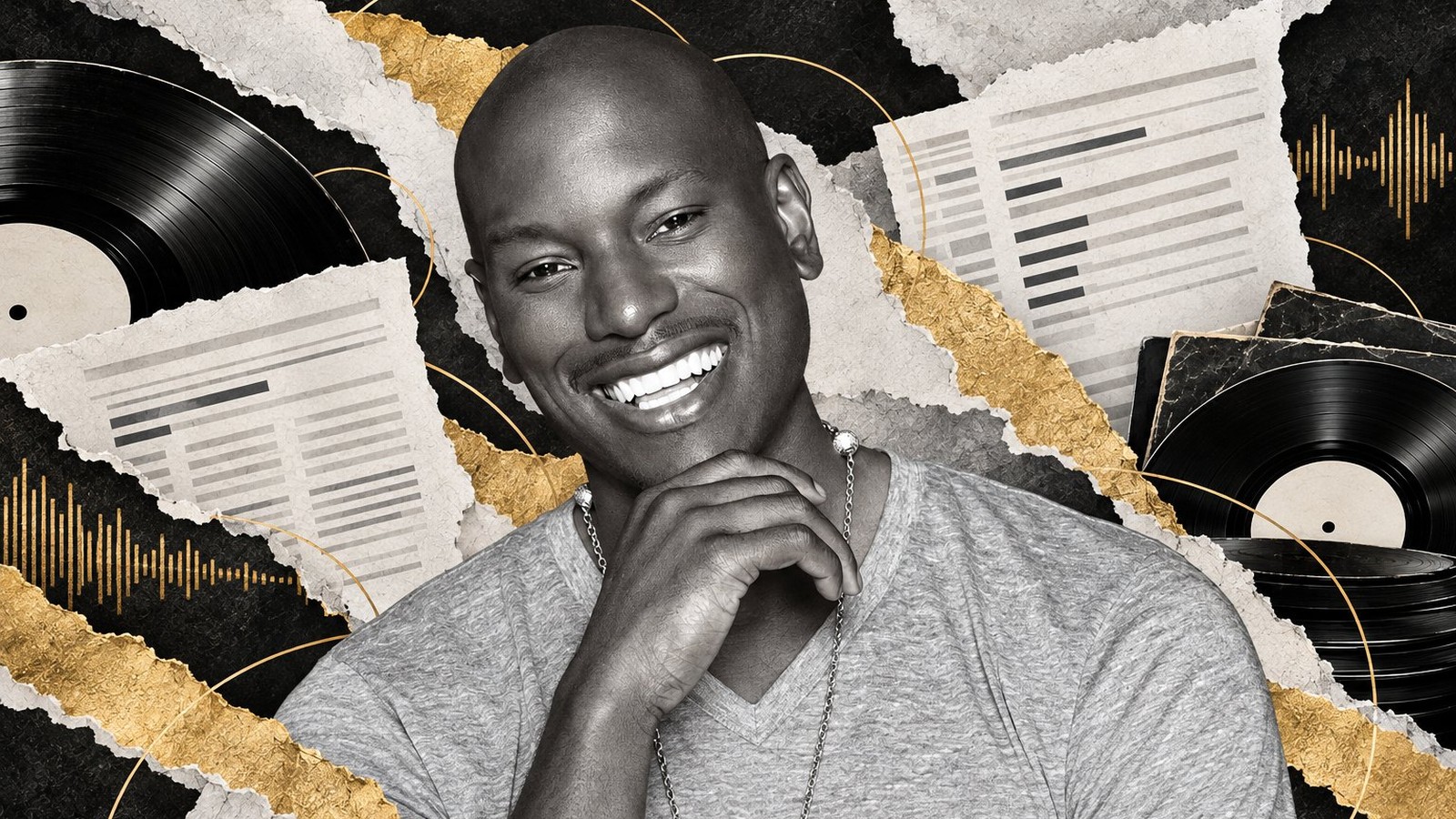
Cover credit: Tyrese Gibson photograph supplied by BlackRefer with publication permission confirmed; converted to monochrome and integrated into an AI-assisted editorial collage. No endorsement implied.
Editorial note: Independent educational analysis. No affiliation with or endorsement by Tyrese Gibson, his team, or the named organizations is implied. The proposed workflows are BlackRefer analysis, not an audit of Gibson’s systems or a description of a BlackRefer royalty-recovery service. No private financial records, catalog ownership, recovered sums, or technical performance have been verified. General business education only; not legal, tax, accounting, or financial advice.
The BlackRefer Briefing
Market intelligence, venture capital insights, emerging trends, and leading Black-owned businesses—all delivered to your inbox.